
You Can’t Outwork a Bad Strategy
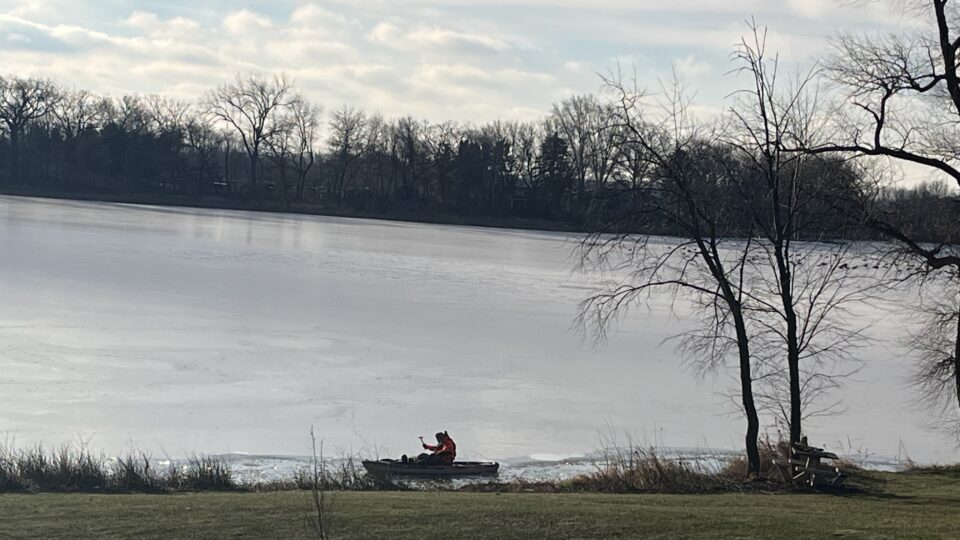
I live on a lake in rural Wisconsin. I’m not a hunter, but hunters sometimes find our lake during duck season. Yesterday there were a couple thousand Canada geese on our lake and the lake was still open (not frozen). It’s been below freezing every day this week and the lake froze for the first time this season last night. Despite that, a lone duck hunter in a kayak decided to try his luck with his bow on our lake this morning. I was a bit worried for the geese when he first went out there, but I quickly realized I could just sit back with a cup of tea and enjoy the show. You can read on knowing no animals (or humans) were harmed.
It was about 18 degrees. The hunter was dressed well in waterproof boots and layers which made it easier to watch because I was actually more worried for his safety than the geese’s. He stomped into the lake towing his kayak. He had to break through the ice with his boots to get into the water at all. The nearest geese were about 50 yards away. They all stood up on the ice to watch. Once he stepped into the water, they took off and flew another hundred yards away and settled in for the spectacle. He ended up wading through the shallows of the lake with a hammer breaking up the ice as much as he could. He was also wearing a life vest which gave me another level of comfort despite the fact he was more likely to freeze to death than drown. He finally broke up enough ice that he could sit in his kayak. He spent the next half hour hammering at the ice and paddling around about five feet from shore. While he diligently fought the ice, the geese flew off in groups of five to fifty until there wasn’t a goose to be seen on the lake. He finally looked up for a break after about 45 minutes and realized he was alone on the lake. I could visibly see his sigh of defeat. And then he paddled five feet back to shore and dragged his kayak, his bow, and all his gear back to his truck and left. Within an hour, the geese started returning to the lake to enjoy the water he opened for them.
As much as you might think this is unnecessarily risky and a totally stupid waste of time, effort, and energy, I see this sort of thing happening all the time with the leaders and organizations we work with. Peter Drucker taught us that “culture eats strategy for breakfast.” But no amount of skill, preparation, resources, or people-centered culture will overcome a bad strategy. I saw a great example of that this morning.
We often don’t stop and consider our strategy before we jump into action. We get a goal in mind (our own version of bagging a goose), we gear up as smart as we know how and jump into action. Then we flail around wildly exerting a bunch of energy, effort, and resources, sometimes even putting ourselves, our teams, and our organizations in precarious positions as a result. Often, we don’t get anywhere near our goal. But we were trained to work hard and never give up, so we keep at it until we run out of resources or get some kind of very obvious signs of failure (we look up and the geese are all gone). We could save ourselves, our teams (many of whom are like me in this story, full well knowing this isn’t going to work and hanging back to watch the show), and our organizations a lot of wasteful initiatives and effort if we were to fully work out our strategy before we jump into action. Had this hunter come out yesterday, the lake was fully open and he would have been able to easily and quietly kayak through open water. Had he come back in a week, the lake would be fully frozen and he’d be able to walk on it without falling through (but it won’t be duck season any longer and there also may or may not be ducks on the lake). Had he decided to hunt with a rifle instead of a bow, he could hunt ducks and geese in the air rather than in the water.
Next time you set a goal, check out your strategy before committing yourself to a course of action. If you need help sanity checking your strategy, get a mentor (someone who has done it before) or a coach (who can help you think it through).